Age 1–2
A first look, a tooth count and a talk about bottles, sippy cups and brushing. Short, friendly and mostly for the parents.
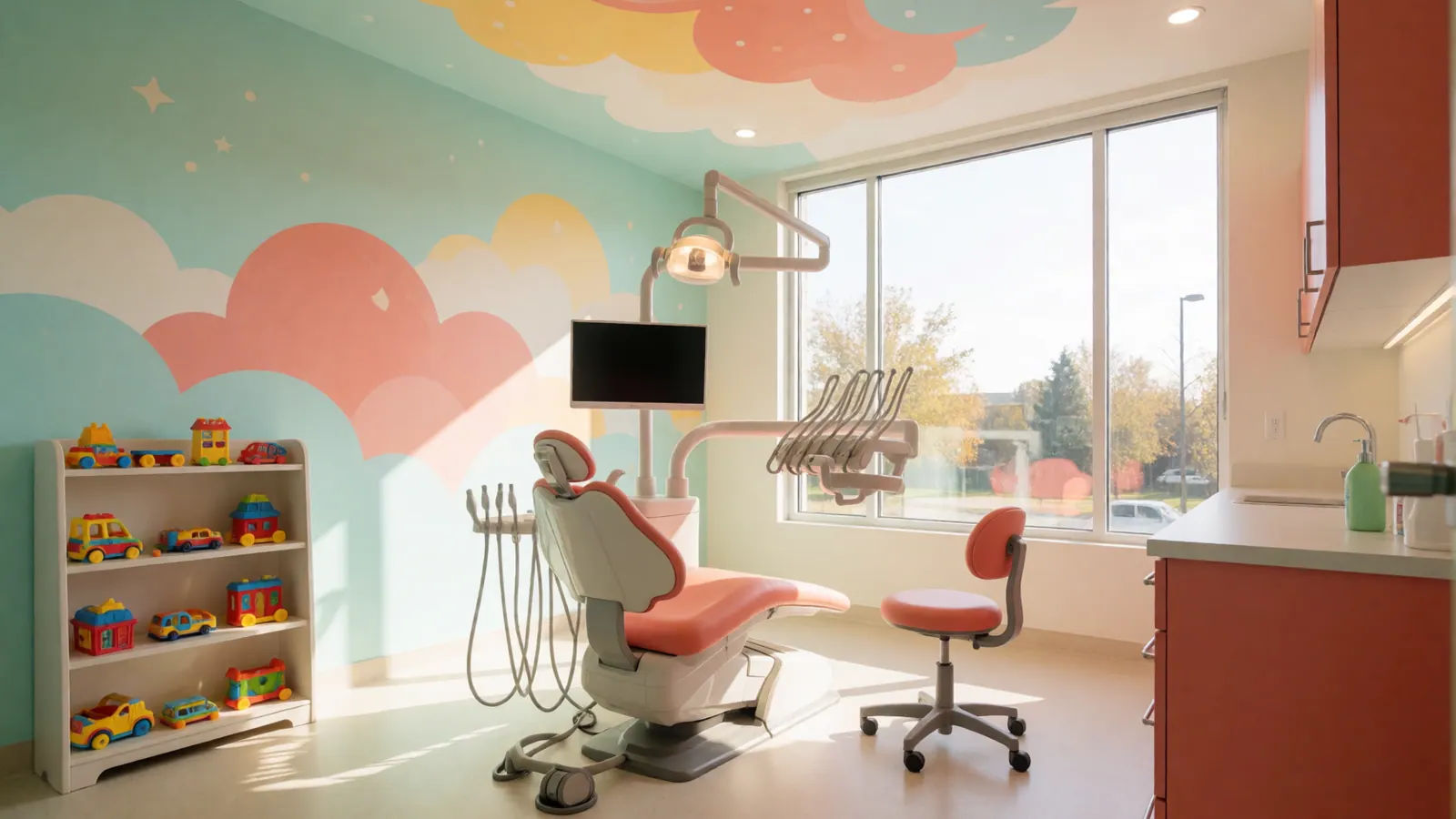
A children's dentist, a room built for kids, and appointments long enough that nobody has to hurry.
Why a separate room
Most of what makes children afraid of the dentist is not pain — it is being hurried, being talked over, and not knowing what the noise is. So Operatory 3 is a children's room: it has its own mural, its own toy shelf, and a schedule with enough slack that a nervous four-year-old can take ten minutes to get into the chair without anyone tapping a watch.
Dr. Grace Villanueva completed a pediatric dentistry residency and has spent her career on exactly this. She sees children from the first tooth to the last teenage check-up before college.

By age
A first look, a tooth count and a talk about bottles, sippy cups and brushing. Short, friendly and mostly for the parents.
Full check-ups, polishing and fluoride varnish. This is the age where a good experience pays off for the next thirty years.
Adult molars arrive — the moment for sealants. We also screen the bite and flag anything Dr. Marquez should look at.
Check-ups, mouthguards, wisdom-tooth monitoring and straightforward advice about whitening and aligners.
For parents
A few things genuinely help, and they cost nothing:
And if the first visit does not go well, that is genuinely fine. We would far rather see a child three times for nothing than once for something they will remember badly.
Questions
The ones that come up at the front desk almost every week.
By their first birthday, or within six months of the first tooth appearing — whichever comes first. That first visit is mostly a friendly look and a chat with you; it sets the tone for every visit after it.
Your child sits on your lap or in the chair, whichever they prefer. Dr. Villanueva counts the teeth, checks how they are coming through, and shows them the mirror and the little water squirter. If they are happy, we polish. If they are not, we do not force it — we try again next time.
We give them time, which is the only thing that actually works. The kids' room has its own mural and toy shelf, appointments are booked so nobody is rushed, and we explain everything before it happens using words a child understands. Ask for a morning slot — children cope far better before they are tired.
For most children, yes. A sealant is a thin coating over the grooves of the back teeth, where the great majority of childhood cavities start. It takes minutes, there is no drilling, and it is far cheaper than the filling it prevents.
We accept most PPO plans, and children's preventive visits are fully covered under many of them. Bring the card or send us the details when you book and we will check the benefits before you come in.
Through the teenage years. Dr. Villanueva sees patients up to 18, including sports mouthguards and wisdom-tooth monitoring, and will screen for orthodontic problems — Dr. Marquez is down the corridor if braces come up.
Choose Dr. Grace Villanueva on the booking page and pick a morning slot — they are the easiest ones for young children.